Introduction
Artificial Intelligence (AI) is no longer a futuristic idea—it is already shaping the world around us. From personalized online shopping to automated customer service, AI technologies are transforming how businesses operate and how people work. One of the most important discussions today is the AI impact on the economy.
As companies adopt AI to improve efficiency and reduce costs, entire industries are evolving. While some jobs are disappearing, new opportunities are emerging. Understanding this shift is essential for workers, business owners, and policymakers alike.
In this article, we will explore how AI is changing the economy, its benefits and challenges, and what it means for the future.
What Is AI and Why It Matters for the Economy
Artificial Intelligence refers to machines or software that can perform tasks that usually require human intelligence. These tasks include learning, problem-solving, decision-making, and even understanding language.
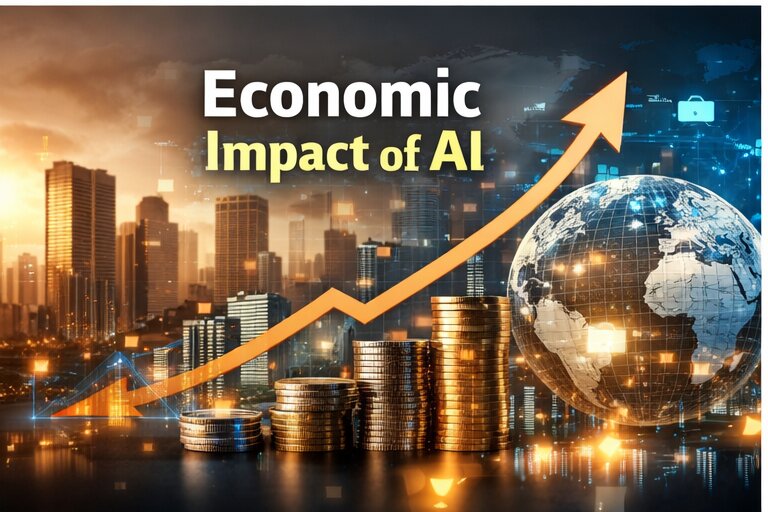
Why AI Matters
AI plays a crucial role in economic growth because it:
- Increases productivity
- Reduces operational costs
- Enhances decision-making
- Creates new markets and industries
The AI impact on the economy is significant because it affects both micro-level business operations and global economic trends.
How AI Is Transforming Key Industries
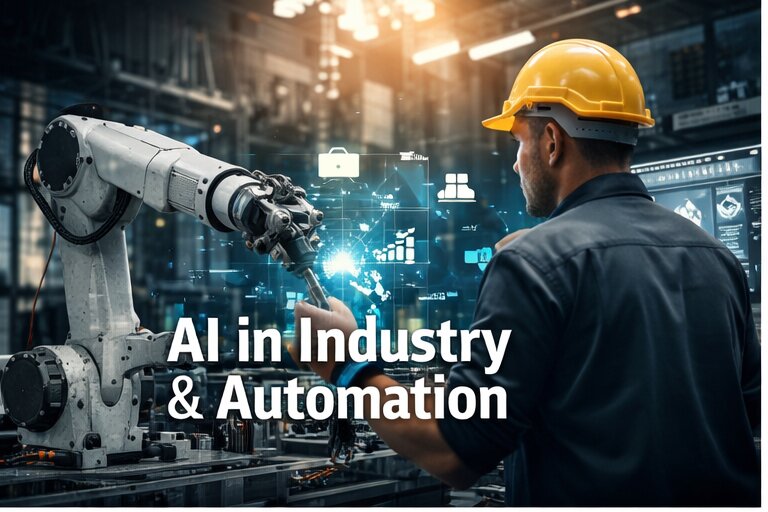
1. Manufacturing and Automation
AI-powered robots and automation systems are improving efficiency in factories. Machines can now handle repetitive tasks faster and with fewer errors.
Example:
A manufacturing company using AI can produce goods 24/7 with minimal human intervention, reducing costs and increasing output.
2. Healthcare
AI is revolutionizing healthcare by improving diagnostics, predicting diseases, and assisting doctors in treatment planning.
Example:
AI tools can analyze medical images faster than humans, helping detect diseases like cancer early.
3. Finance and Banking
Banks and financial institutions use AI for fraud detection, risk assessment, and customer service.
Example:
AI algorithms can detect unusual transactions in real time, preventing fraud and protecting customers.
4. Retail and E-commerce
AI helps businesses understand customer behavior and offer personalized recommendations.
Example:
Online stores suggest products based on browsing history, increasing sales and improving user experience.
5. Transportation and Logistics
AI improves route planning, reduces fuel consumption, and enhances delivery efficiency.
Example:
Delivery companies use AI to find the fastest routes, saving time and costs.
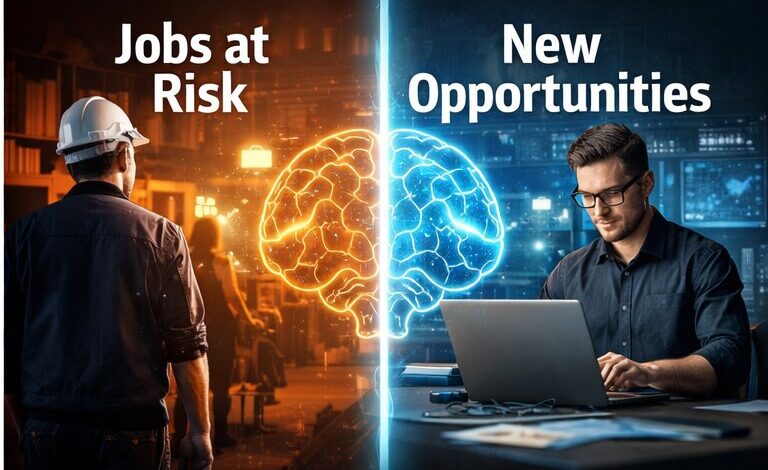
AI and Job Market: Opportunity vs. Disruption
One of the biggest concerns about the AI impact on the economy is its effect on jobs.
Jobs at Risk
AI is likely to replace repetitive and routine tasks, such as:
- Data entry
- Basic customer support
- Assembly line work
New Job Opportunities
At the same time, AI is creating new roles, including:
- AI specialists
- Data analysts
- Machine learning engineers
- Digital marketing experts
The Shift in Skills
Workers need to adapt by developing skills such as:
- Critical thinking
- Creativity
- Digital literacy
- Problem-solving
Economic Benefits of AI
1. Increased Productivity
AI allows businesses to produce more in less time, boosting overall economic output.
2. Cost Reduction
Automation reduces labor and operational costs, making businesses more efficient.
3. Innovation and New Markets
AI creates new products and services, leading to new industries and opportunities.
4. Better Decision-Making
AI analyzes large amounts of data quickly, helping businesses make smarter decisions.
Challenges and Risks of AI in the Economy
Despite its benefits, the AI impact on the economy also brings challenges.
1. Job Displacement
Automation may lead to unemployment in certain sectors if workers are not retrained.
2. Income Inequality
Highly skilled workers may benefit more from AI, increasing the gap between different income groups.
3. Data Privacy Concerns
AI relies on data, raising concerns about how personal information is collected and used.
4. Dependence on Technology
Over-reliance on AI systems can create risks if systems fail or are misused.
Practical Tips to Adapt to the AI Economy
To stay competitive in a world shaped by AI, consider these practical steps:
For Individuals
- Learn digital and AI-related skills
- Stay updated with industry trends
- Focus on creativity and problem-solving
- Take online courses in technology and data
For Businesses
- Invest in AI tools strategically
- Train employees to work alongside AI
- Focus on innovation and customer experience
- Ensure ethical use of AI technologies
For Students
- Choose fields with future demand (tech, data, AI)
- Develop strong analytical and communication skills
- Gain hands-on experience through internships
The Future of AI and the Global Economy
The future of AI looks promising. Experts predict that AI will contribute trillions of dollars to the global economy in the coming years.
Key trends to watch:
- Increased automation across industries
- Growth of remote and digital jobs
- Expansion of AI-driven startups
- Stronger regulations for ethical AI use
The AI impact on the economy will continue to grow, making it essential for everyone to adapt and prepare.
Conclusion
Artificial Intelligence is reshaping the global economy in powerful ways. From improving productivity to creating new industries, the AI impact on the economy is both exciting and challenging.
While AI may replace some jobs, it also opens doors to new opportunities. The key to success lies in adaptability—learning new skills, embracing technology, and staying informed.
By understanding how AI affects the economy, individuals and businesses can make better decisions and thrive in this rapidly changing world.
FAQs
1. What is the AI impact on the economy?
The AI impact on the economy refers to how artificial intelligence influences jobs, productivity, industries, and overall economic growth.
2. Will AI replace all jobs?
No, AI will replace some repetitive jobs but also create new roles that require advanced skills and creativity.
3. Which industries benefit most from AI?
Industries such as healthcare, finance, manufacturing, and retail benefit significantly from AI technologies.
4. How can I prepare for an AI-driven economy?
You can prepare by learning digital skills, staying updated with technology trends, and focusing on creativity and problem-solving.
5. Is AI good or bad for the economy?
AI has both positive and negative effects. It boosts productivity and innovation but also creates challenges like job displacement.