
Introduction
Over the past decade, Bitcoin has become one of the most talked-about financial assets in the world. Many investors are fascinated by its potential to generate large returns. However, one thing that often surprises newcomers is Bitcoin Price Volatility.
Unlike traditional assets such as stocks or gold, Bitcoin can experience large price changes within hours or even minutes. One day the price might rise significantly, and the next day it may drop sharply.
Understanding Bitcoin Price Volatility is essential for anyone interested in cryptocurrency investing. By learning what drives these price movements, investors can make more informed decisions and avoid emotional trading.
In this article, we will explain the key reasons behind Bitcoin’s price fluctuations, how the crypto market works, and practical tips to help you understand the dynamics of Bitcoin’s volatile nature.
What Is Bitcoin Price Volatility?
Bitcoin Price Volatility refers to the rapid and sometimes unpredictable changes in Bitcoin’s market price over a short period of time.
In simple terms, volatility measures how much the price of an asset moves up or down. Bitcoin is considered a highly volatile asset, which means its price can swing dramatically compared to traditional financial instruments.
For example:
- Bitcoin may increase by 10% in a single day
- It may also drop by 15% within hours
- Major market events can cause sudden price spikes or crashes
While volatility creates risks, it also creates opportunities for traders and long-term investors.
Key Factors Behind Bitcoin Price Volatility
Several important factors influence Bitcoin’s price movements. These forces constantly interact in the cryptocurrency market, causing prices to rise and fall.
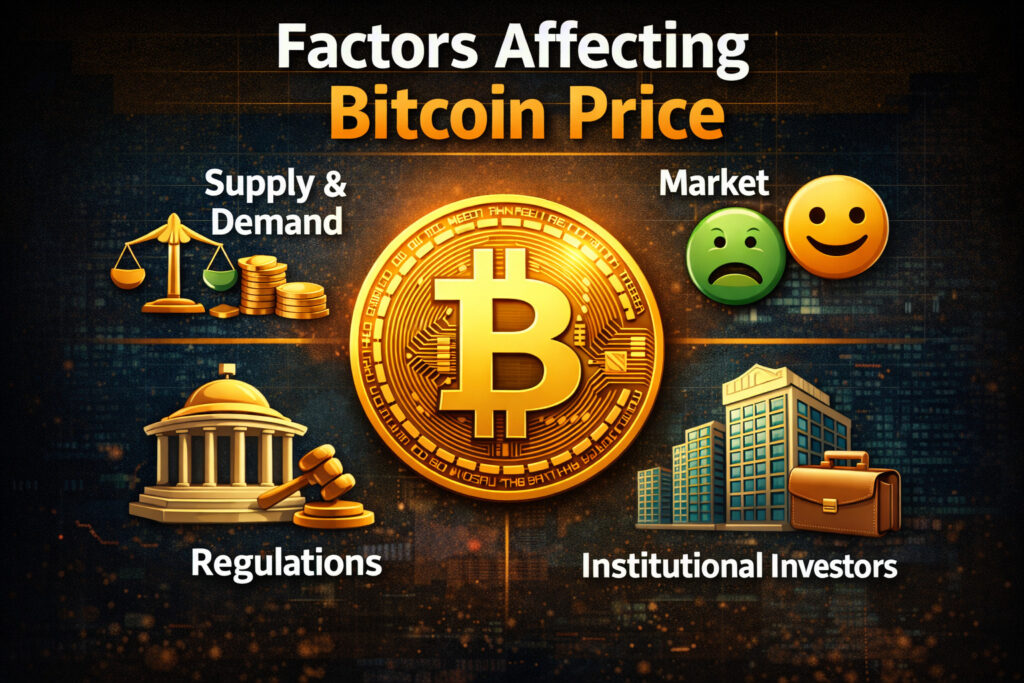
1. Supply and Demand
One of the main reasons behind Bitcoin Price Volatility is basic supply and demand economics.
Bitcoin has a limited supply of 21 million coins, which makes it a scarce digital asset. When demand increases while supply remains limited, the price tends to rise.
For example:
- Increased interest from investors can push prices higher
- Reduced demand may cause prices to fall
Because the crypto market operates globally 24/7, demand can change rapidly.
2. Market Sentiment
Market sentiment plays a major role in cryptocurrency pricing.
Investor emotions such as:
- Fear
- Greed
- Optimism
- Panic
can significantly influence Bitcoin’s value.
Positive news may encourage investors to buy Bitcoin, causing prices to increase. On the other hand, negative news may lead to panic selling and sharp declines.
Social media, online forums, and financial news often amplify these reactions.
3. Government Regulations
Government policies and regulations can strongly affect Bitcoin Price Volatility.
When governments introduce favorable cryptocurrency regulations, investors often feel more confident about entering the market.
However, strict regulations or bans can create uncertainty and lead to price drops.
Examples of regulatory influence include:
- Cryptocurrency taxation policies
- Government restrictions on exchanges
- Legal recognition of digital assets
These developments can quickly shift investor confidence.
4. Institutional Investment
Large financial institutions have started investing in Bitcoin in recent years. Companies, hedge funds, and asset managers now participate in the crypto market.
When institutions buy large amounts of Bitcoin, prices can rise significantly due to increased demand.
However, when large investors sell or rebalance their portfolios, it can trigger market downturns.
Institutional activity often amplifies Bitcoin Price Volatility.
5. Media Coverage and Public Attention
Media coverage plays a powerful role in shaping public perception of Bitcoin.
When major news outlets report positive developments about Bitcoin, new investors may rush into the market.
Examples include:
- Bitcoin reaching a new all-time high
- Major companies accepting Bitcoin payments
- Governments exploring cryptocurrency adoption
Similarly, negative headlines about security breaches or market crashes may cause panic selling.
6. Market Liquidity
Liquidity refers to how easily an asset can be bought or sold without significantly affecting its price.
Compared with traditional financial markets, the cryptocurrency market still has relatively lower liquidity.
This means:
- Large buy orders can push prices up quickly
- Large sell orders can cause sharp drops
Lower liquidity contributes to higher Bitcoin Price Volatility.
7. Global Economic Conditions
Global economic trends can also influence Bitcoin prices.
During times of economic uncertainty, some investors view Bitcoin as a digital alternative to traditional assets.
Factors that may impact Bitcoin demand include:
- Inflation concerns
- Currency instability
- Financial market crises
- Interest rate changes
When investors look for alternative assets, Bitcoin demand can increase rapidly.
Examples of Bitcoin Price Volatility
To better understand Bitcoin Price Volatility, consider a few historical examples.

Major Bull Runs
Bitcoin has experienced several strong bull markets where prices increased dramatically.
Examples include:
- Early adoption years when Bitcoin gained global attention
- Institutional investment waves
- Major cryptocurrency adoption announcements
These events often caused rapid price increases.
Market Corrections
Bitcoin has also experienced major corrections where prices dropped sharply.
Market corrections may occur due to:
- Profit-taking by investors
- Regulatory concerns
- Market speculation bubbles
These corrections are a normal part of volatile markets.
Benefits of Bitcoin Price Volatility
Although volatility may seem risky, it also offers some advantages.
1. Opportunities for Traders
Traders often benefit from price fluctuations by buying low and selling high.
Volatility creates opportunities for:
- Day trading
- Swing trading
- Short-term investment strategies
2. Potential for High Returns
Because Bitcoin prices can rise rapidly, investors who enter the market early may see significant gains over time.
However, high returns usually come with higher risks.
3. Market Growth and Innovation
Volatility attracts attention to the cryptocurrency market. This attention often leads to:
- New blockchain projects
- Technological innovation
- Increased adoption
These developments help the crypto ecosystem grow.
Risks Associated With Bitcoin Price Volatility
Despite its benefits, Bitcoin volatility also carries risks.

Sudden Price Drops
Sharp price declines can occur without warning. Investors who panic sell may experience significant losses.
Emotional Trading
Volatile markets often trigger emotional reactions, which can lead to poor investment decisions.
Market Manipulation
Because the crypto market is still developing, some large investors may influence prices through large transactions.
Understanding these risks is important for responsible investing.
Practical Tips for Dealing With Bitcoin Volatility
If you are interested in Bitcoin investing, these practical strategies can help manage volatility.
1. Invest Only What You Can Afford to Lose
Cryptocurrency investments carry risk. Always invest responsibly and avoid risking essential funds.
2. Think Long Term
Many experienced investors focus on long-term trends rather than short-term price movements.
Long-term strategies can help reduce stress caused by daily volatility.
3. Diversify Your Portfolio
Avoid putting all your funds into one asset. Diversification helps reduce overall investment risk.
4. Stay Informed
Follow reliable financial news and market analysis to better understand cryptocurrency trends.
Knowledge helps investors make more confident decisions.
The Future of Bitcoin Price Volatility
As cryptocurrency markets mature, some experts believe Bitcoin Price Volatility may gradually decrease.
Several factors could contribute to this:
- Increased institutional adoption
- Improved regulations
- Higher market liquidity
- Wider global acceptance
However, because Bitcoin is still a relatively new financial asset, volatility will likely remain part of the market for the foreseeable future.
Conclusion
Bitcoin Price Volatility is one of the defining characteristics of the cryptocurrency market. Rapid price changes are influenced by many factors, including supply and demand, investor sentiment, government regulations, institutional investment, and global economic trends.
While volatility can create risks, it also offers opportunities for traders and long-term investors. Understanding the forces behind Bitcoin price movements allows investors to approach the market with greater confidence and knowledge.
As the cryptocurrency ecosystem continues to grow and evolve, Bitcoin will likely remain a fascinating and influential digital asset in the global financial landscape.
Frequently Asked Questions (FAQs)
Why is Bitcoin so volatile?
Bitcoin is volatile because it has limited supply, strong market speculation, and rapidly changing demand. News, regulations, and investor sentiment also impact price movements.
Can Bitcoin volatility decrease in the future?
Yes. As the cryptocurrency market becomes more mature and regulated, volatility may gradually decrease due to increased stability and liquidity.
Is Bitcoin volatility good for investors?
Volatility can create both opportunities and risks. Traders may benefit from price swings, while long-term investors may experience large gains or losses.
Should beginners invest in Bitcoin?
Beginners should approach Bitcoin carefully, learn about the market, and only invest funds they can afford to lose.